
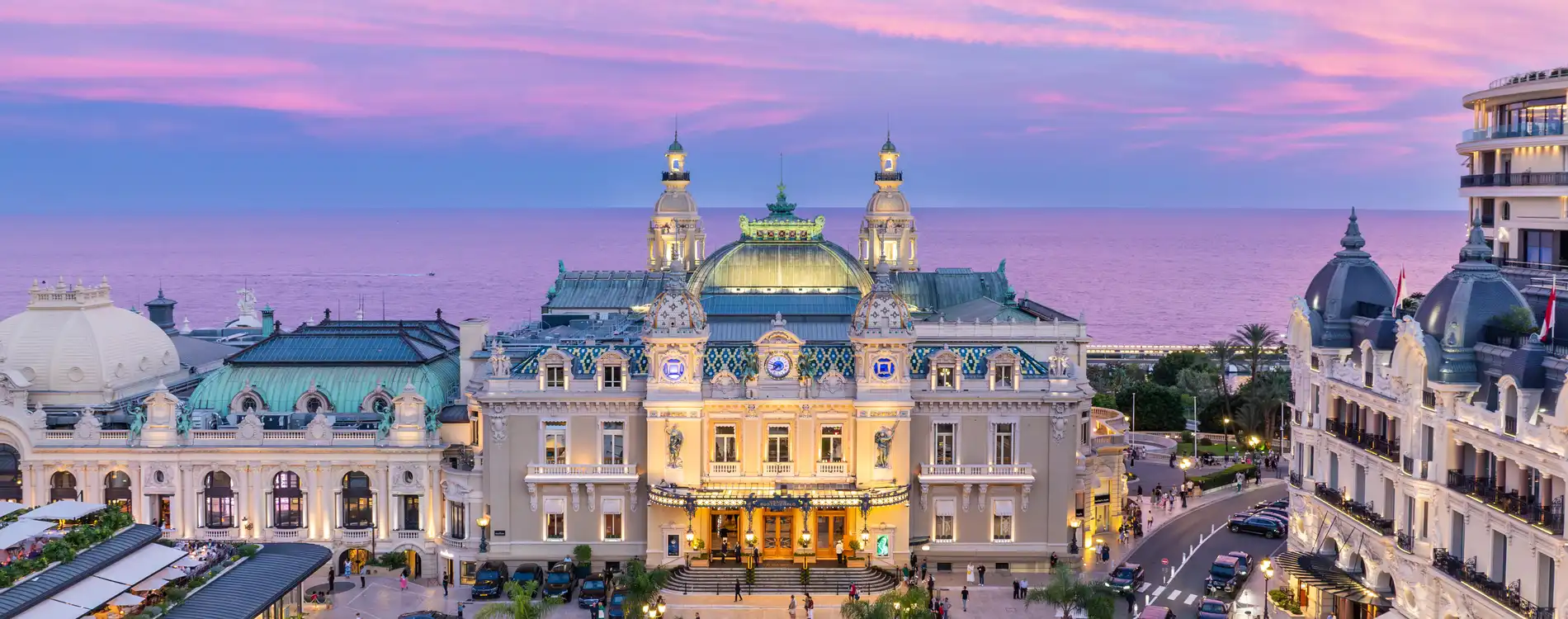
The image of the Casino de Monte-Carlo is one of timeless glamour: tuxedo-clad patrons, the spin of the roulette wheel, and the glittering Mediterranean beyond. Yet, this global icon of luxury was not born from opulence, but from a story of near-destitution and a princely gamble of last resort. The tale of how a bankrupt microstate transformed itself into the world’s most famous gambling destination is a riveting chapter in the broader history of gambling, showcasing how casino history is often intertwined with the desperate fiscal manoeuvres of nations.
A Princely Gamble: The Desperate Origins of Monte Carlo
Long before it became synonymous with high-stakes play, Monaco was a rocky, agrarian principality on the verge of collapse. Its survival hinged on a radical and controversial bet placed by its ruler.
The Bankruptcy of Monaco
In the mid-19th century, the Grimaldi family’s rule over Monaco was perilously weak. The territory, stripped of most of its lands and reliant on a failing lemon and orange trade, was impoverished. Prince Charles III of Monaco, who ascended in 1856, inherited a treasury so empty that he considered selling the principality altogether. With few natural resources, he turned to a contentious but proven revenue stream: legalised gambling. France had just outlawed gaming houses, creating an opportunity. Charles III’s desperate gamble was to grant an exclusive concession, hoping to attract the newly displaced wealth from across the border.
The Francois Blanc Concession
In 1863, the prince awarded the gaming licence to Francois Blanc, a French businessman already famed for his success at the Bad Homburg casino. Blanc purchased the existing Société des Bains de Mer et Cercle des Étrangers (the Sea Bathing Society and Circle of Foreigners), which would become the legendary SBM. His vision was grander than a simple casino; he aimed to create an integrated luxury resort. The name “Monte Carlo” (Mount Charles) was coined in honour of the prince, and with Blanc’s management, the first dedicated casino building opened its doors. The princely gamble was beginning to show promise.
Architectural Ambition: Building a Palace of Chance
As profits grew, the need for a monument befitting Monaco’s new wealth became clear. The original casino building was deemed insufficiently majestic. The task of designing its replacement was given to an architect who understood spectacle.
Charles Garnier’s Vision
In 1878, the SBM unveiled a new, breathtaking building designed by none other than Charles Garnier, the genius behind the Paris Opera. Garnier was commissioned to create not just a gambling hall, but a palace that would embody luxury and artistry, distancing itself from the seedy connotations of typical betting houses. His vision was to craft an environment so opulent that it would legitimise gambling as a pastime for the highest echelons of European society.
A Temple of Beaux-Arts Opulence
The new Casino de Monte-Carlo was a masterpiece of Beaux-Arts architecture. Garnier filled it with breathtaking features designed to overwhelm the senses:
- A grand atrium supported by 28 Ionic columns of onyx.
- Opulent gaming rooms adorned with frescoes, gilded sculptures, and crystal chandeliers.
- The iconic Salle Garnier opera house attached to the complex, establishing Monte Carlo as a cultural as well as a gaming destination.
This temple of chance was deliberately designed to make visitors feel like royalty, ensuring that the very act of entering was an event.
The British Are Coming: Monte Carlo’s UK Patrons
While the casino aimed for a pan-European elite, it was the British aristocracy and nouveau riche who became its most devoted and defining patrons, forging a unique chapter in German British history through shared, if unofficial, diplomatic and social circuits.
The Victorian and Edwardian Exodus
From the 1870s onwards, Monte Carlo became a essential winter retreat for British high society. The combination of guaranteed sunshine, Riviera scenery, and elegant gambling proved irresistible. Direct train services, like the famous “Blue Train” from Calais, made the journey from London feasible. The English Promenade, English Church, and English-language libraries cemented its status as a home away from home. This Victorian and Edwardian exodus transformed the local economy and culture, making the British the casino’s most important clientele.
Infamous British High-Rollers
With the British came tales of spectacular wins and losses. Among the most notorious was ‘Captain’ William Frederick Mainwaring, a gentleman gambler who reportedly lost £70,000 in a single night in 1873. His story, and those of others like him, were splashed across British newspapers, fuelling both moral outrage and fascinated allure. These figures became cautionary tales and celebrities, their exploits cementing Monte Carlo’s reputation as the ultimate proving ground for fortune and nerve.
Tales of Fortune and Ruin: Legends of the Tables
The casino’s history is woven from the personal dramas played out at its tables. It became a stage where mathematics met myth, and where a few individuals entered popular legend.
The Man Who Broke the Bank
The most famous of all is Charles Deville Wells, an Englishman who, in 1891, achieved the seemingly impossible. Over several sessions, he won so consistently at the roulette tables that the casino reportedly ran out of funds to pay him—he had literally “broken the bank.” His legendary streak, fuelling wild rumours of a “system,” inspired the popular song “The Man Who Broke the Bank at Monte Carlo.” The phrase ‘breaking the bank’ popularised by British gambler Charles Wells entered the global lexicon, forever linking Monte Carlo with the ultimate gambling fantasy.
Systems, Superstition, and Scandal
Wells’s success spawned endless fascination with “infallible” betting systems. From the Martingale to the D’Alembert, patrons believed logic could conquer chance. Alongside these systems flourished deep superstition—lucky charms, specific rituals, and an avoidance of the number 17, considered terribly unlucky in Italian culture. The tables also witnessed scandal, including the 1925 affair of Hungarian adventurer Zsa Zsa Gabor and her husband, who were accused of using a hidden electromagnet to cheat at roulette, highlighting the eternal cat-and-mouse game between the house and determined players.
Surviving the 20th Century: War, Cinema, and Reinvention
The tumultuous 20th century threatened the casino’s existence, but it ultimately adapted, leveraging new forms of mythology to ensure its survival.
Wartime Closures and Post-War Glamour
Both World Wars forced the casino to close its doors, a stark reminder of its vulnerability. During WWII, it was used as a hospital. Its post-war revival, however, was swift. The 1950s and 60s saw it reclaim its status as a jet-set playground, attracting Hollywood stars like Grace Kelly (who became Princess of Monaco) and Frank Sinatra. The SBM expanded its vision, developing hotels, sporting clubs, and gourmet restaurants, evolving from a singular casino into a comprehensive luxury resort.
The James Bond Effect
No single force modernised Monte Carlo’s image for a global audience like the James Bond film franchise. The casino was a natural fit for 007’s world of sophistication and danger. Its most prominent cinematic moment came in 1995’s James Bond film ‘GoldenEye’ (1995) featuring the casino, where Pierce Brosnan’s Bond famously engages in a high-stakes baccarat game against the villainous Xenia Onatopp. This association cemented Monte Carlo’s place in popular culture as the quintessential setting for elegant, high-risk intrigue.
The history of the Casino de Monte-Carlo is the story of a gamble that paid off on a monumental scale. From the desperate fiscal strategy of Prince Charles III of Monaco to the architectural genius of Charles Garnier, and through its reign as the playground of British high society, it has evolved into a symbol transcending mere gambling. It stands today, as part of the vast SBM empire, a monument to risk, reward, and the enduring allure of chance—proof that sometimes, the most desperate gamble can create an icon for the ages.