
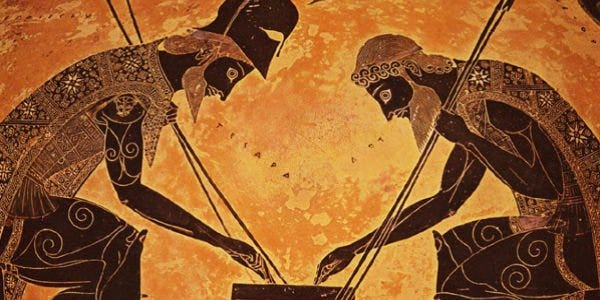
Gambling’s allure is as old as civilisation itself, a constant thread woven through the fabric of society from the Roman Empire to the neon-lit streets of today. This enduring fascination with chance, risk, and reward has evolved through myriad forms and venues, reflecting the social, legal, and technological currents of each era. From the clandestine dice games of antiquity to the state-sanctioned lotteries of the modern age, the history of gambling offers a unique lens through which to view our past, revealing our complex relationship with fortune, vice, and entertainment.
Ancient Foundations: Dice, Chariots, and the Roman Alea
Long before the chip and the card, the ancients shaped the bedrock of gambling culture. Nowhere was this more pronounced than in the Roman Empire, where gambling permeated all levels of society, despite being officially frowned upon. The Roman attitude was a paradox of prohibition and practice; gambling was largely illegal except during the Saturnalia festival, yet it flourished in barracks, taverns, and even the imperial palace.
The Lure of the Dice in Rome
The most popular game was ‘Alea’, a forerunner to backgammon played with dice. Wagers on dice throws were commonplace, with literary sources and surviving loaded dice from archaeological digs attesting to both the popularity and the perennial problem of cheating. The game was so synonymous with gambling that ‘alea’ came to mean ‘chance’ or ‘hazard’ itself. The Roman authorities, viewing gambling as a destructive vice that led to idleness and debt, imposed strict fines on losers, though enforcement was notoriously inconsistent.
Wagering on Chariots and Gladiators
Beyond the tavern, the most spectacular public gambling occurred at the Circus Maximus and the Colosseum. Romans would passionately bet on the outcome of chariot races, backing factions distinguished by colours like the Blues and Greens. Similarly, wagers were placed on gladiatorial combats, turning life-and-death spectacles into high-stakes financial contests. This public, communal betting on skill and spectacle established a template for sports wagering that would endure for millennia.
The Rise of European Gaming Houses and Salons
The medieval and early modern periods saw gambling continue in informal settings, but the 17th and 18th centuries witnessed a crucial development: the birth of dedicated, formal establishments where gambling was the primary activity.
Venice’s Ridotto: The First Official Casino
In 1638, the Venetian government, seeking to control the rampant private gambling that plagued the city, inaugurated the Ridotto di San Moisè. This was a state-owned gambling house, often cited as the first official casino in the world. Open during the carnival season, it offered regulated games like biribi (a lottery-like game) and bassetta to the masked nobility. The Ridotto set a precedent for centralised, controlled gambling environments, though it was closed in 1774 due to concerns over the ruin of Venetian families.
London’s Coffee House Bookmakers
Across Europe, London developed its own distinctive betting culture not in lavish palaces, but in the bustling, smoky atmosphere of its coffee houses. By the 18th century, establishments like White’s and Almack’s had become de facto betting shops and gentlemen’s clubs. Patrons would wager on everything from political outcomes and duels to the weather and the sex of unborn children. These venues were the epicentres of gossip, business, and high-stakes gambling, creating a uniquely British model of social betting that laid the groundwork for the modern bookmaker.
The 19th Century: Bath, Baden-Baden, and British Regulation
The 19th century brought a dual evolution: the glamorisation of the casino in continental Europe and a decisive, restrictive turn in British law.
The Spa Resort Casino Model
In towns like Baden-Baden in Germany and Bath in England, gambling became intertwined with leisure and health. The casino at Baden-Baden, set within the elegant Kurhaus, became a summer destination for European aristocracy. It wasn’t just a gambling den; it was a social salon for music, conversation, and seeing and being seen. This model presented gambling as a refined, respectable pastime for the elite, a stark contrast to the image of the seedy urban gaming hell.
The Betting Act 1853 and its Aftermath
Meanwhile, in Britain, public and political anxiety over the corrosive effects of gambling on the working classes led to a legislative crackdown. The Betting Act 1853 specifically targeted public betting houses, making them illegal. This did not stop gambling, but rather drove it underground and into new forms. The Act led directly to the rise of:
- Private Members’ Clubs: Exclusive venues where gambling continued away from public scrutiny.
- Street Bookmaking: The illegal ‘bookie’s runner’ who took bets in back alleys and pubs.
- Credit Betting: Wagering via post or telegraph with off-course bookmakers.
This law shaped the clandestine, fragmented nature of British gambling for over a century.
The Monte Carlo Phenomenon and Casino Glamour
No establishment did more to cement the image of the casino as a temple of luxury and high society than the Casino de Monte-Carlo. Opened in 1865 by the Société des Bains de Mer, the casino was a desperate and ultimately spectacularly successful venture to save the bankrupt House of Grimaldi. Designed by Charles Garnier, the architect of the Paris Opéra, its opulent interiors of marble, gold leaf, and crystal chandeliers set a new global standard. It became the winter playground for royalty, industrialists, and literary figures, detaching the casino from its spa-town origins and rebranding it as a standalone destination of unparalleled glamour and high stakes.
The 20th Century: Las Vegas, Legislation, and the National Lottery
The epicentre of casino glamour shifted dramatically in the post-war era, while Britain finally began to unwind its restrictive gambling laws.
The Las Vegas Boom
What began as a dusty railroad stop in the Nevada desert transformed into the world’s gambling capital after the state legalised gambling in 1931. The 1940s and 50s saw the rise of the first lavish casino-hotels on the Strip, like the Flamingo, funded by figures with links to organised crime. Las Vegas perfected a new, accessible, and theatrical model of gambling—democratic, round-the-clock, and entertainment-focused—that stood in stark contrast to the formal exclusivity of Monte Carlo.
UK Legalisation and the National Lottery
In Britain, societal change prompted a legal overhaul. The pivotal Betting and Gaming Act 1960 finally legalised casinos and betting shops under strict conditions. This led to a boom in high-end London clubs like the famous Clermont Club in Berkeley Square, and the proliferation of high-street betting shops. Decades later, another seismic shift occurred with the launch of the UK National Lottery in 1994 by the Camelot Group. This state-sanctioned game, with its massive jackpots and promise of funding for good causes, normalised gambling for millions and created a new, mainstream form of periodic public wagering.
The Digital Revolution: From Poker Rooms to Mobile Betting
The final transformative leap in the history of gambling began in the mid-1990s with the advent of the commercial internet, dissolving physical boundaries entirely.
The First Online Wagers
The groundwork for online gambling was laid in 1994 with the licensing of the first online casino software by Microgaming in the Isle of Man. This was quickly followed by the launch of platforms like Cryptologic, which facilitated secure financial transactions. The early 2000s saw the explosive growth of online poker rooms, televised tournaments, and a vast array of virtual slot machines and table games, bringing the casino directly into the home.
The Age of In-Palm Betting
The proliferation of smartphones and high-speed mobile internet completed the revolution. Today, live-dealer games streamed from studios in real-time, in-play sports betting, and dedicated betting apps have made gambling a truly portable, 24/7 activity. The “casino” is now a digital platform accessible anywhere, presenting unprecedented challenges for regulation and responsible gambling, while fulfilling the ancient desire for a quick wager with futuristic immediacy.
From the dice scattered on a Roman tavern floor to the digital spin of a virtual roulette wheel on a smartphone screen, the venues and technologies of gambling have undergone a profound evolution. Yet, as this journey from the Circus Maximus to Monte Carlo and from the Ridotto to the online poker room illustrates, the fundamental human drivers—the thrill of risk, the hope of reward, and the desire for social excitement—remain remarkably unchanged. The history of gambling is, in essence, a mirror to our own enduring fascination with fortune.